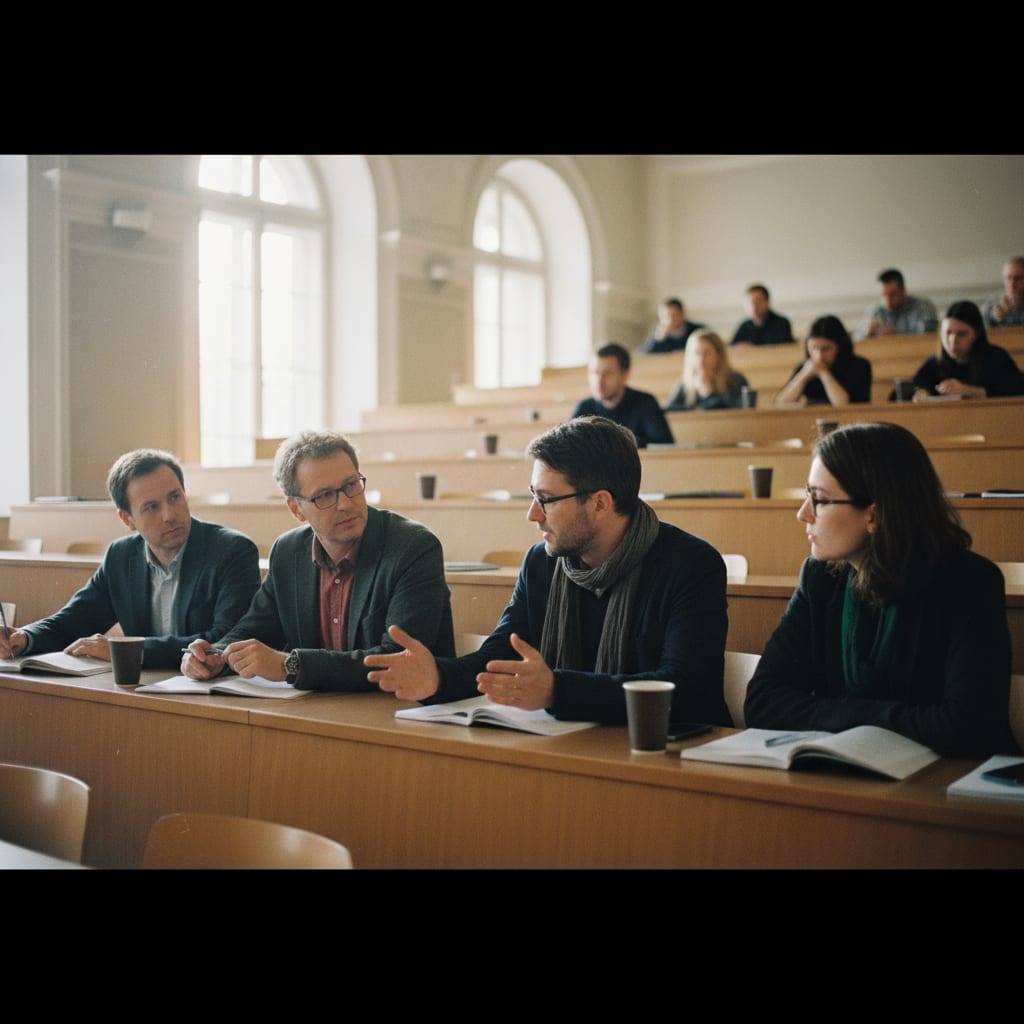
A cognitive philosopher has advanced the view that what humans experience as reality arises from networks of conscious agents rather than a fixed external world, describing everyday existence as a jointly constructed arena of interactions.
Dr Elena Voss, of the University of Melbourne, presented the framework this week in a public lecture at the university. She said the model treats each person as an agent exchanging information across interfaces that together produce the appearance of space, objects and time.
Co-created interfaces
According to Voss, the so-called physical realm functions as a collective workspace in which agents negotiate outcomes through their perceptions. She likened individual experiences to icons on a shared screen, visible because multiple agents align on the same data exchange rather than because an independent material substrate exists.
“Loneliness, in this account, reflects limited access to certain channels rather than isolation within a vast emptiness,” Voss said. Purpose is recast as continued participation in the network, with actions mattering insofar as they alter the configurations other agents encounter.
Mortality and persistence
The proposal reframes death as the dissolution of one interface icon rather than the termination of awareness. Voss argued that consciousness, once decoupled from a particular node, remains available for further interactions within the wider network.
She acknowledged the idea challenges both materialist and traditional religious accounts yet insisted it follows directly from treating perception as the primary datum. Departmental colleagues described the lecture as speculative but noted it has prompted renewed discussion across psychology and philosophy seminars.
Further papers outlining formal models are expected later this year.