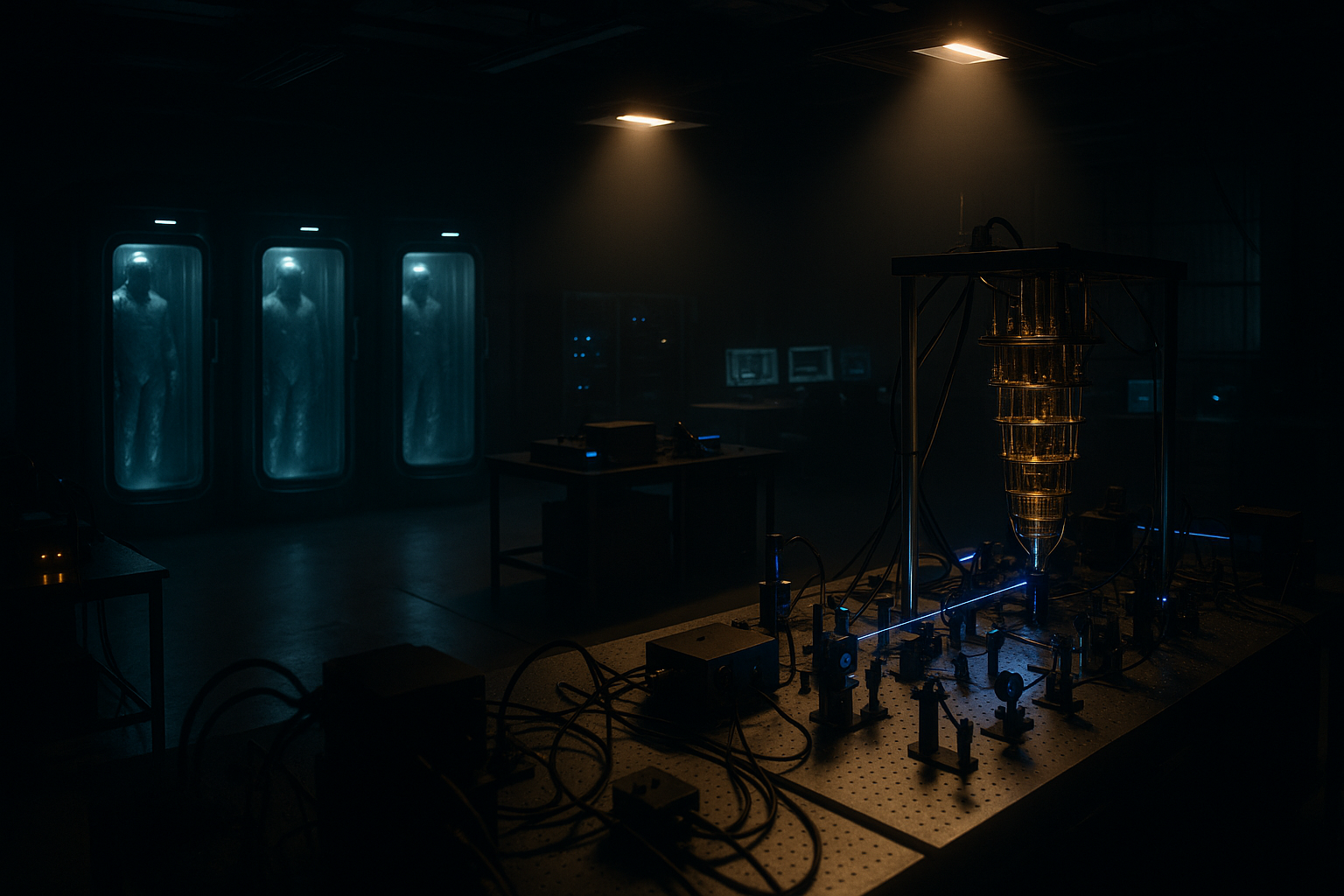
The gap between what physicists can demonstrate and what reaches public understanding has widened sharply in recent years. Laboratories and classified programmes move faster than press releases or school curricula suggest.
Quantum machines scale quietly
Systems with thousands of qubits now run error-corrected logical operations at scale in several facilities. Error rates have fallen below thresholds once considered impossible five years ago. Practical algorithms for chemistry simulation and optimisation already outperform classical supercomputers on select tasks. Public demonstrations show only a fraction of the capability in use.
Fusion crosses practical thresholds
Repeated ignition at the National Ignition Facility and parallel gains at private reactors have moved net energy gain from headline curiosity to engineering target. Target designs and materials now sustain higher yields with tighter control. Commercial timelines once quoted as 2040 now appear conservative even in open literature.
Metamaterials and control of fields
Engineered structures manipulate electromagnetic, acoustic and thermal fields with centimetre-scale precision. Defence-funded programmes have fielded prototypes for sensing and cloaking that exceed civilian market offerings. Publications lag application by years; many advances remain in the grey literature of technical reports.
Why the disconnect persists
Security classifications, commercial secrecy and academic caution all slow disclosure. High-impact papers often omit context that would reveal operational maturity. Social media and open-source intelligence now surface fragments faster than official channels, creating the growing sense that capability outruns narrative.
The result is a widening asymmetry: the tools exist, yet the language and policy to discuss them do not. The public register of physics remains anchored in the 1990s while the workbench has moved on.